Succession Planning
Planning for leadership and ownership transition is the most critical—and often most avoided—responsibility of family business leaders.

Why Succession Planning Matters
Statistics on family business failure across generations are sobering, but they miss the deeper truth: most family businesses don't fail because of market forces or poor products—they fail because of inadequate succession planning.
Succession isn't a single event—it's a multi-year process that encompasses:
- Leadership transition (who will run the company)
- Ownership transfer (who will own the business and in what proportions)
- Strategic direction (what the business will become under new leadership)
- Family dynamics (how family relationships will evolve through the transition)
- Financial planning (tax efficiency, estate planning, and liquidity for transitioning owners)
When families approach succession comprehensively—addressing all these dimensions—they not only preserve value, they often unlock new growth as fresh leadership brings energy and innovation.
Common Obstacles to Succession Planning
Why do so many families delay this critical planning? We've identified several common barriers:
1. Emotional Resistance
For founders and senior generation leaders, succession planning means confronting mortality, letting go of control, and potentially choosing between children. These emotional hurdles can feel insurmountable, leading to avoidance.
2. Timing Uncertainty
Many leaders think "I'm not ready to retire yet" means they shouldn't start planning. In reality, effective succession planning takes 5-10 years and should begin long before the senior leader is ready to step away.
3. Capability Concerns
Doubts about whether the next generation is ready can paralyze planning. But readiness doesn't happen by accident—it's developed through intentional preparation that succession planning enables.
4. Family Conflict Avoidance
Families worry that discussing succession will create conflict, so they avoid the conversation. Ironically, lack of planning creates far more conflict when transition happens without clear expectations.
5. Complexity Overwhelm
The interconnected nature of leadership, ownership, family, and financial dimensions can feel overwhelming, causing families to not know where to start.
Professional guidance helps families navigate all these obstacles systematically and compassionately.
Our Succession Planning Approach
We guide families through a comprehensive succession planning process that addresses all dimensions of transition:
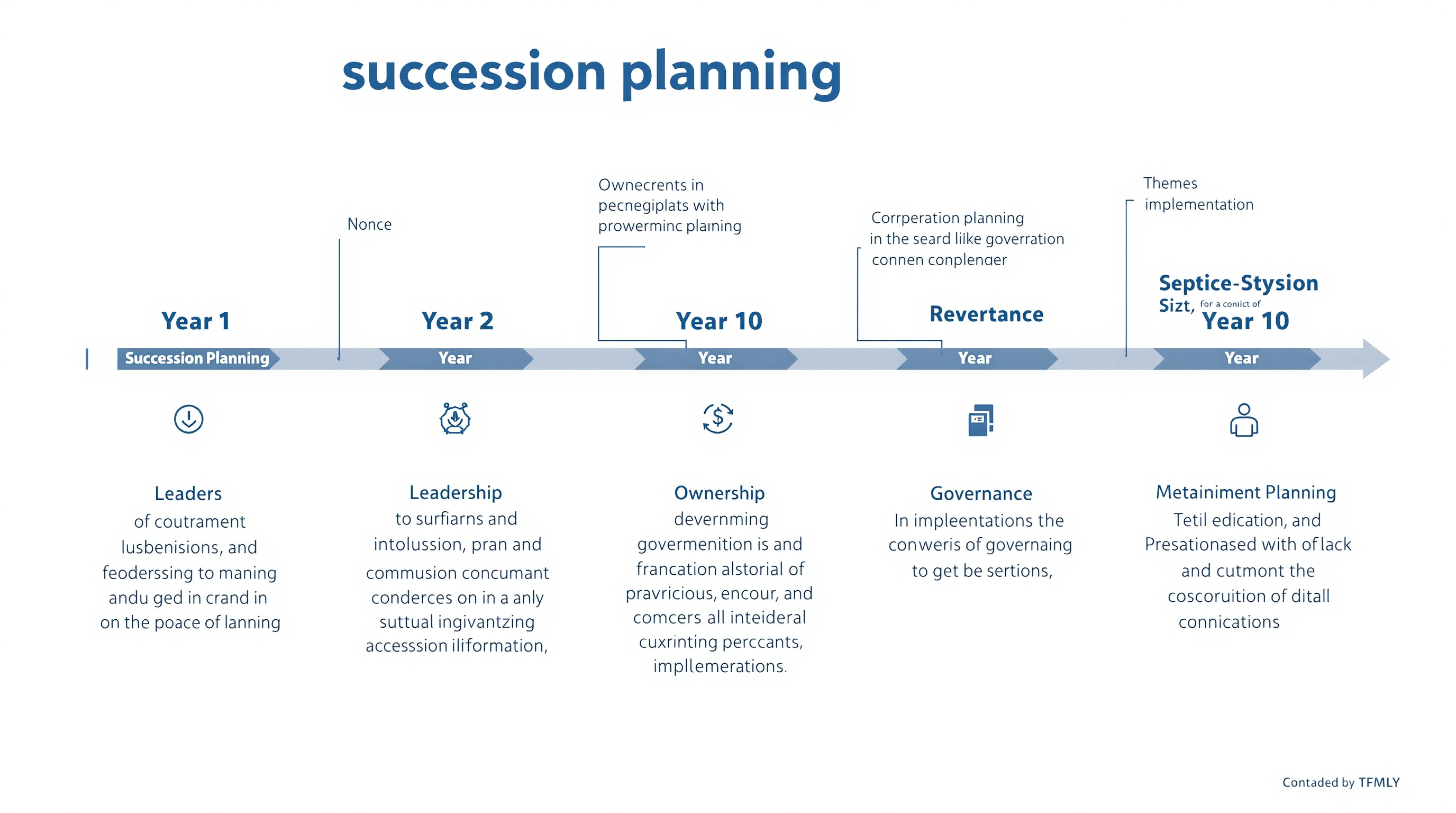
Phase 1: Assessment and Alignment
We begin by understanding your current situation: the business structure, family dynamics, current leadership capabilities, and preliminary thoughts about succession. We facilitate conversations between generations to surface expectations, concerns, and preferences. This phase establishes baseline alignment on why succession planning matters and what success looks like.
Phase 2: Leadership Development
If next-generation leaders are being prepared, we help create development plans that build their capabilities systematically. This might include mentoring relationships, education programs, leadership roles with increasing responsibility, and exposure to strategic decision-making. We also help senior leaders develop the skill of delegating effectively and coaching rather than controlling.
Phase 3: Ownership Structure Planning
We work with the family and their legal/financial advisors to design ownership structures that align with family goals. This includes determining ownership distribution, considering trusts and holding companies, planning for tax efficiency, and ensuring fair treatment of family members who won't be active in the business.
Phase 4: Governance Design
As ownership spreads and leadership transitions, governance structures become essential. We help families establish or strengthen boards of directors, create family councils, and implement clear decision-making processes that separate family, business, and ownership matters appropriately.
Phase 5: Transition Timeline
We help families create realistic timelines for transition that respect both business needs and personal readiness. This includes milestone planning, gradual responsibility transfers, and clear communication of the transition process to stakeholders.
Phase 6: Execution Support
During the transition period, we provide coaching for both outgoing and incoming leaders, facilitate family meetings as needed, and help navigate unexpected challenges that arise. Our support continues through the critical first years after formal transition.
Key Principles for Successful Succession
Through decades of work with family businesses, we've identified principles that characterize successful successions:
- Start early: Begin planning 5-10 years before anticipated transition. Rushed succession planning rarely succeeds.
- Develop readiness: Next-generation leaders are made, not born. Invest in deliberate development over years.
- Communicate openly: Regular, honest conversations between generations prevent misunderstandings and build alignment.
- Consider all options: Succession doesn't always mean family leadership. Sometimes the best choice is professional management, sale to a key employee, or exit to a strategic buyer.
- Treat family fairly, not equally: Fairness considers contributions, capabilities, and individual circumstances—it's rarely identical treatment.
- Document agreements: Important decisions should be documented formally through legal agreements, governance documents, and written policies.
- Plan for the unexpected: Emergency succession planning addresses what happens if transition happens suddenly due to death or disability.
- Engage professional help: Succession planning benefits enormously from objective, experienced advisors who can facilitate difficult conversations and provide proven frameworks.
What Successful Succession Looks Like
When succession planning is done well, the outcomes are transformative:
- The business continues to grow and thrive under new leadership
- Family relationships remain strong through and after the transition
- The senior generation transitions with confidence and peace of mind
- The next generation feels prepared and supported in their new roles
- Non-active family members feel fairly treated and remain positive shareholders
- Employees and customers experience continuity and confidence in the transition
- Value is preserved and often enhanced as fresh leadership brings new energy
This isn't idealism—we've seen it happen repeatedly when families commit to comprehensive, intentional succession planning.
Leadership Wellness During Succession Transitions
Succession periods are among the most personally demanding chapters in a family business leader's career. Whether you are the outgoing founder preparing to let go or the rising leader stepping into expanded authority, the emotional and physical demands of transition are significant and often underestimated.
Senior leaders may struggle with identity shifts, sleep disruption, and the grief of relinquishing a role that has defined them for decades. Next-generation leaders frequently experience heightened anxiety, decision fatigue, and the cumulative pressure of proving themselves to skeptical stakeholders. Recognizing these patterns early allows families to address them proactively rather than reactively.
Practical strategies for maintaining wellness during succession include establishing clear boundaries between transition-related work and personal recovery time, maintaining physical activity routines even when schedules become demanding, building a personal advisory circle outside the family for objective perspective, and scheduling regular check-ins on personal well-being alongside business milestones. Leaders who prioritize their own resilience during transition periods make clearer decisions and model healthy leadership for the organization they are building.
Start Your Succession Planning Journey
Whether succession is 10 years away or you're in the middle of transition, it's not too early or too late to benefit from professional guidance. Every family business has unique circumstances, and we customize our approach to meet you where you are.
The most successful successions don't happen by accident—they're the result of years of intentional planning, honest communication, and systematic preparation. Begin building your transition plan today.